When 28-year-old aspiring journalist Shiori Ito goes public in May 2017 with her rape allegation by
then Prime Minister Shinzo Abe’s closest journalist and biographer, she feels she has no other
choice in order to change Japan’s antiquated sexual assault laws. Her press conference shocks the
public in a society where speaking up on such matters is considered shameful. Within days, Shiori is
swept into the center of Japanese politics — the right wing views her as a threat to bring down the
Abe government and the left hails her a hero for the same reason. Death threats, cyberbullying, and
hate mail take Shiori into a downward spiral. When she files a civil case, the accused rages all-out
war against her. Determined not to set a bad example for other victims, Shiori pushes forward with
her case and resolves to publish a book about her experience.
Directed by herself with the most personal of material, BLACK BOX DIARIES captures Shiori’s
tumultuous, heart-wrenching, and ultimately triumphant journey, going behind the headlines to reveal
what has been like to walk in her shoes. The documentary reveals the personal toll of a society’s
web of politics, media, and technology on the humanity of its individuals. Being both victim and
journalist investigating her own case, the documentary shows that what Shiori did was not only to
create social change but ultimately to keep herself alive.
Section: Internationales Forum
-
Black Box Diaries
-
Only on Earth
ONLY ON EARTH takes us on an immersive and visually striking journey into Southern Galicia, one of Europe’s most vulnerable wildfire zones. During the hottest summer on record, both humans and animals struggle to cope as inextinguishable fires draw closer. Wild horses have roamed the Galician mountains for centuries, playing a crucial role in fire prevention by curbing flammable undergrowth – but their numbers are dwindling as human development clashes with nature.
Through the eyes of the horses, a young cowboy, a seasoned fire analyst, a devoted equine vet, and a farming family on the frontlines, the film reflects on the fragile balance of our natural world and human-animal relations. -
Holding Liat
On the morning of October 7, 2023, Israeli-American
Liat Atzili and her husband Aviv were at home when
Hamas attacked their kibbutz. By nightfall, Liat and Aviv
are captives in Gaza along with 250 other people – 12 of
whom, like Liat, are American citizens.
Caught between international diplomacy and a rapidly
escalating war, their family must face their own
uncertainty and conflicting perspectives in the pursuit
of Liat and Aviv’s release. This agonizing process, and
the ultimate fate of their loved ones, challenges how the
members of the family understand themselves and their
place in the conflict.
Through the intimate lens of a family’s experience,
HOLDING LIAT poses complex questions of identity
across generations, as the family is thrust into the
epicenter of a global conflict rapidly unfolding in real-time. -
Yalla Parkour
Filmmaker Areeb visited Gaza for the first time at the age of four, where she experienced
her first encounter with the sea. This moment, infused with the magic of the sea and her
Palestinian motherʼs smile, left a lasting impression on her. Recently, nostalgia for her
homeland resurfaced when she discovered a video of young men practicing parkour on
Gaza’s sandy shores. Their joy starkly contrasted with the distant echoes of explosions.
Longing to reconnect with her past, Areeb reaches out to the parkour team and forms a
bond with an athlete named Ahmed. Together, they navigate the remnants of Gaza,
exploring places like a cemetery, a run-down mall, and the remains of an airport.
As their relationship deepens, Ahmed reveals the harsh realities of life in Gaza,
transforming Areeb’s initial curiosity into a profound awareness of the struggles he
faces. Areeb grapples with feelings of guilt and conflict as she witnesses Ahmedʼs desire
to escape the confines of his homeland, understanding the emotional void such a
departure would entail. Their journey becomes not only a quest to reclaim memories but
also an exploration of identity, belonging, and the haunting legacy of a home left behind. -
Tales of Oblivion
In a hot summer morning in 1444, in the fishing village of Lagos, southern Portugal, a group of African people was disembarked. In the field next to the port, they were given away as slaves to the local noblemen and merchants. For the next 400 years, more than six million Africans would be trafficked in Portuguese ships to Europe and across the Atlantic. In a rainy winter afternoon in 2009, in Lagos, archeologists excavating the site where an underground parking was under construction, began to find human skeletons. Working on the site for the following five months, as the parking was being built around
them, the archeologists uncovered the skeletons of 158 enslaved African men, women, and children. Their bodies had been dumped in a XV-century landfill. Intertwining these two storylines, Tales of Oblivion threads tales of violence and brutality from the past with sights and sounds of the present. Evoking what took place in these sites and conjuring
memories from the past, Tales of Oblivion is a film-territory where we have no choice but to look at how the present continues to be shaped by the history we carry within us. -
I Saw Three Black Lights
José de los Santos (70) lives in a village on the Colombian Pacific Coast. As child, he learned the arts of mortuary rituals inherited from his African former slaves ancestors. He accompanies the dead ones on their way to eternal rest. One day, the soul of his son Pium-Pium –who was violently murdered– announces his death to him, warning him that he must not die near his home, and above all, he must die in peace. José de los Santos begins a journey through the jungle to find a place to die, defying the curfew imposed by the illegal armed groups that dispute the territory. He must survive the guns to avoid joining the souls in purgatory.
-
Queendom
Gena, a queer artist from a small town in Russia, dresses in otherworldly costumes made
from junk and tape, and protests the government on the streets of Moscow. Born and raised
on the harsh streets of Magadan, a frigid outpost of the Soviet gulag, Gena is only 21. She stages radical performances in public that become a new form of art and activism. By doing that, she wants to change people’s perception of beauty and queerness and bring attention to the harassment of the LGBTQ+ community. The performances – often dark, strange, evocative, and queer at their core – are a manifestation of Gena’s subconscious. But they come at a price. -
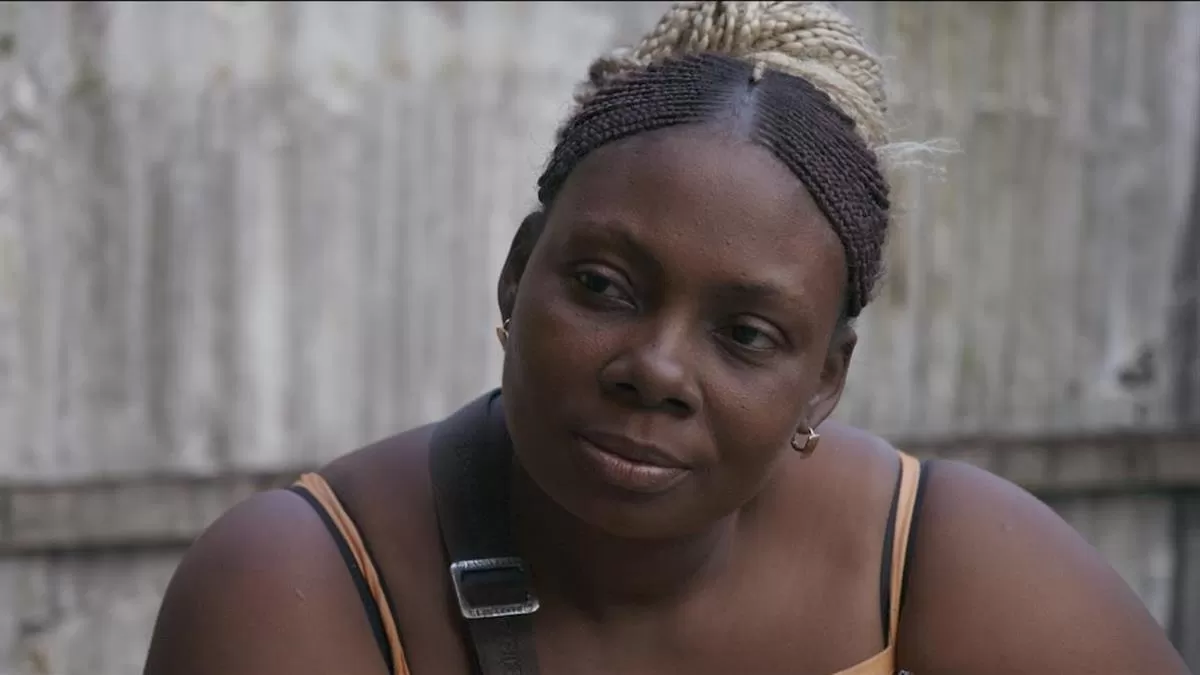
Mambar Pierrette
The city of Douala is in trepidation for the start of the new school year. A long line of customers come to Mambar Pierrette, the neighbourhood dressmaker, to have their clothes ready for imminent social events and ceremonies. More than just a sewer, Pierrette becomes the confidant of her customers, of a generation. But when the rain starts pouring down and threaten to flood her workshop – one of several successive misfortunes – Pierrette will have to stay afloat.
-
Far from being Lipizzans
Olga Kosanović lebt seit ihrer Geburt 1995 in Wien – doch ihr Antrag auf die österreichische Staatsbürgerschaft wird abgelehnt. Warum? Sie war im Laufe ihres Lebens insgesamt 58 Tage zu lange im Ausland. Diese persönliche Erfahrung ist der Ausgangspunkt für eine kluge, humorvolle und vielschichtige filmische Auseinandersetzung mit den Themen Zugehörigkeit, Nation und Identität.
Mit spielerischem Zugriff kombiniert „Noch lange keine Lipizzaner” Dokumentation, Performance, Interviews und Archivmaterial. Die Regisseurin hinterfragt die Rituale rund um Staatsbürgerschaft und zeigt, wie absurd und willkürlich die Regeln oft sein können. Dabei nimmt sie auch nationale Mythen ins Visier – etwa das Symbol der Lipizzaner, die längst außerhalb Österreichs gezüchtet werden, aber wie kaum etwas anderes für österreichische Identität stehen.
Durch Gespräche mit Jurist:innen, Philosoph:innen und Künstler:innen, wie u.a. Toxische Pommes, Judith Kohlenberger und Robert Menasse, hinterfragt Kosanović mit scharfem Blick, wer dazugehören darf – und warum. Ihr Film ist ein kluges, sehr persönliches und zugleich universelles Plädoyer für ein offeneres Verständnis von Zugehörigkeit. -
On Falling
Portuguese immigrant Aurora (Joana Santos) works as a warehouse picker in a vast fulfilment centre in Scotland. Trapped between the confines of her workplace and her flatshare, Aurora seeks to resist the loneliness, alienation and ensuing small talk which begin to threaten her sense of self. Set against a landscape dominated by an algorithm-driven gig economy designed to keep us apart, ON FALLING explores the vital struggle to find meaning and connection.